
Arrest Warrants in Missaukee County
In Missaukee County, an arrest warrant permits officers to take a person into custody on a criminal charge. It is not issued casually. A judge or magistrate reviews a complaint first and must find probable cause. Michigan's rules spell out what that finding can rest on. Facts stated in the complaint count. So do sworn affidavits, testimony preserved for later review, and hearsay where the law allows it. Two other protections apply in Missaukee County and across the state: the accusation must be in writing and signed, and courts lean toward a summons instead of a warrant unless a listed circumstance calls for arrest.
Why Missaukee County Starts With a Summons, Not a Warrant
A summons just tells a person to show up in court. It does not authorize an arrest. In Missaukee County, as throughout Michigan, the summons is the default route, and a judge may order an arrest warrant instead only in four situations: an assaultive crime or domestic violence, reason to doubt the person will appear, a risk to public safety, or a prosecutor's request for an arrest warrant.
- A written complaint names the offense and its statutory citation.
- The complaint is signed and verified, and the prosecutor approves it.
- The court decides between a summons and an arrest warrant.
- The order goes to a peace officer for service and return.
Because the summons comes first, finding an active warrant in Missaukee County matters. A judge saw a reason to skip the softer option.
What a Missaukee County Arrest Warrant Contains
State law sets the floor for this document. Under MCL 764.1b, a Missaukee County arrest warrant must recite the substance of the accusation against the person. It must also command the officer to bring the accused before the proper magistrate without unnecessary delay, and then be returned to that magistrate.
| Accusation | The charge and the statute the complaint relies on. |
|---|---|
| Command to the officer | The directive to arrest and bring the person before the court. |
| Issuing court | The district or circuit judge or magistrate who signed the order. |
| Case identifiers | Case number and the CTN, SID, and ORI codes used on state forms. |
| Probable-cause reference | A pointer to the complaint or affidavit, where disclosure is allowed. |
| Bail or release direction | Any condition the court set when it signed the order. |
| Return and disposition | Where the officer records service and what happened next. |
The Missaukee County Warrant Charging Path
Charging here starts with the investigating agency. The request then goes to the Missaukee County Prosecuting Attorney at 113 East Prospect Street, reachable at (231) 839-3111. That office reviews felony and misdemeanor requests and authorizes the charge. It does not issue the warrant. A judge does. People who call the prosecutor expecting to clear their name learn that split fast, because the office can only say whether a charge was authorized, and only a judge can recall the order.
Note: Ask which agency requested the charge, because the sheriff and state police both investigate here.
How Missaukee County Arrest Warrants Are Served
Arrest warrants in Missaukee County reach peace officers, most often a deputy from the Missaukee County Sheriff's Office at 110 South Pine Street, whose main line is (231) 839-4338. The post's official page lists the office's services and contacts. The Michigan State Police Cadillac Post patrols this area too, and other agencies may serve warrants in their own cases.
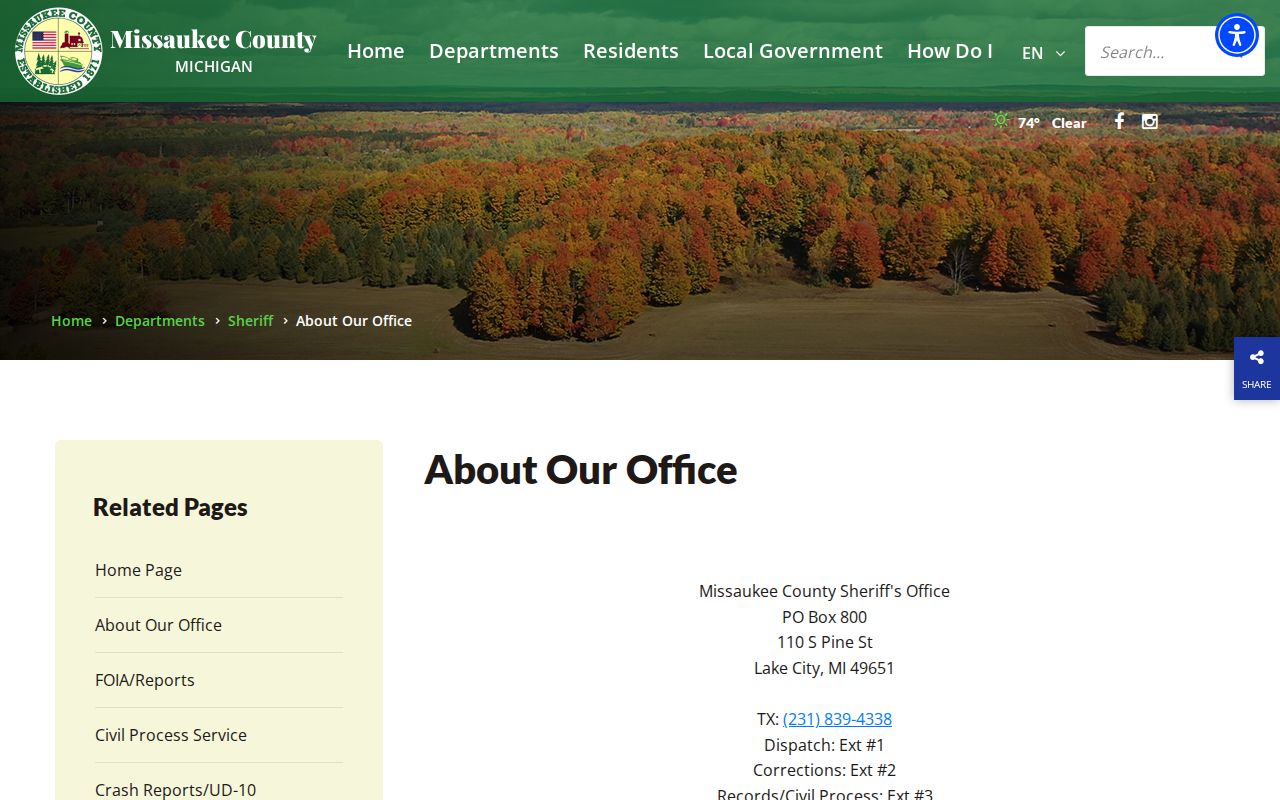
Missaukee County publishes no assignment table and no dedicated warrant line. After an arrest, the person goes before a court without unnecessary delay unless released first. The judge then addresses the charge, counsel, and release.
Note: There is no published bond schedule, so the amount comes from the court order in the case.
Civil Process Is Not a Missaukee County Warrant
One Missaukee County office, two kinds of paper. A criminal warrant comes from a judge and authorizes custody. Civil process is different: documents in noncriminal disputes, with their own service fees and mileage. The sheriff's civil process page linked above lays out those duties and costs.
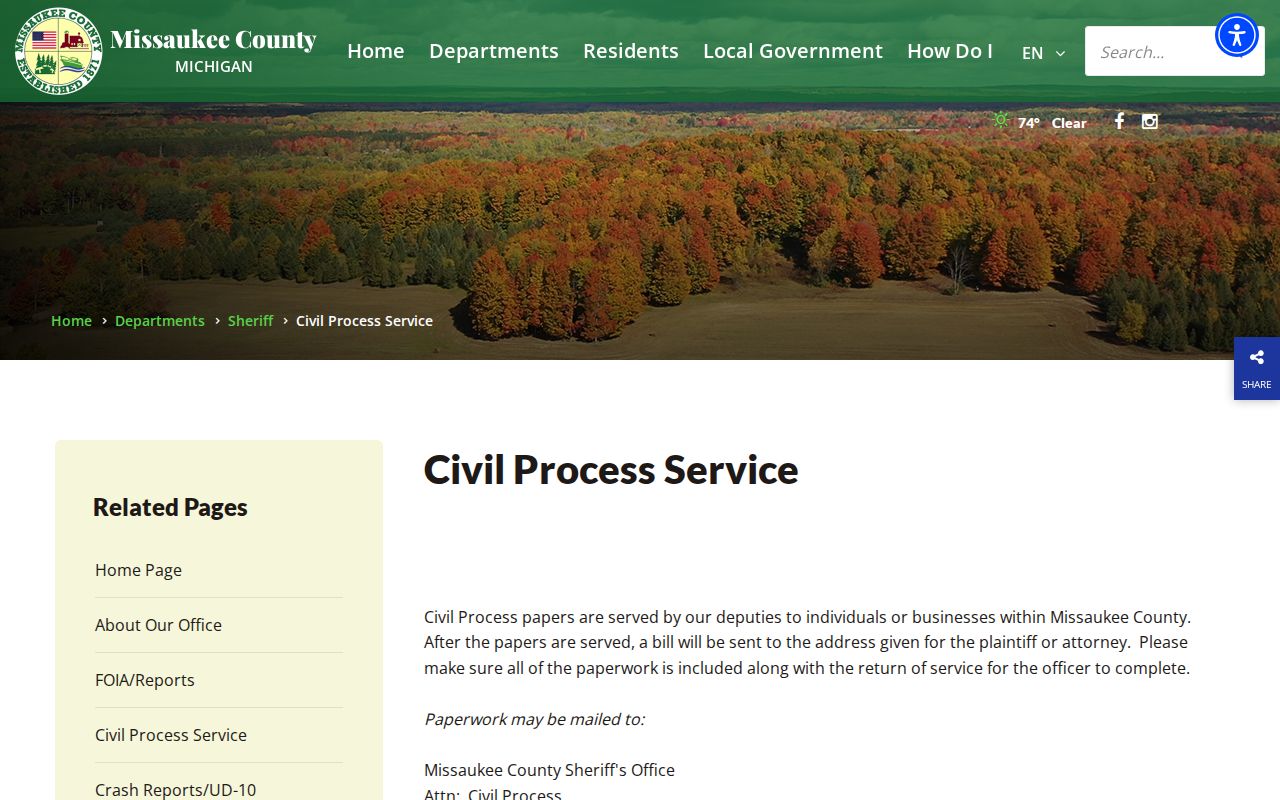
Service fees in a civil matter belong on the sheriff's civil process page. That page covers civil paperwork only. It holds no Missaukee County warrant record and says nothing about criminal status, so keep the two straight before you call.
Arrest Warrant vs Summons vs Bench Warrant
Missaukee County cases can start three ways: a summons, an arrest warrant, or a bench warrant. Each one points to a different starting place in the file.
| Point | Summons | Arrest Warrant | Bench Warrant |
|---|---|---|---|
| What it does | Orders an appearance, no arrest | Authorizes custody on a charge | Answers a missed court obligation |
| How it starts | A complaint and a court decision to avoid arrest | A complaint and a probable-cause finding | Noncompliance inside a pending case |
| Who signs | A judge or magistrate | A judge or magistrate | The judge already on the case |
| Usual next step | Appear on the listed date | Arraignment after arrest | Voluntary appearance, motion, or show-cause hearing |
Federal Warrants Leave the Missaukee County Track
Federal warrants run on a separate track. Missaukee County sits in the Southern Division of the Western District of Michigan. A federal judge or magistrate issues the warrant, federal agents serve it, and the federal docket system holds the file rather than any county clerk.
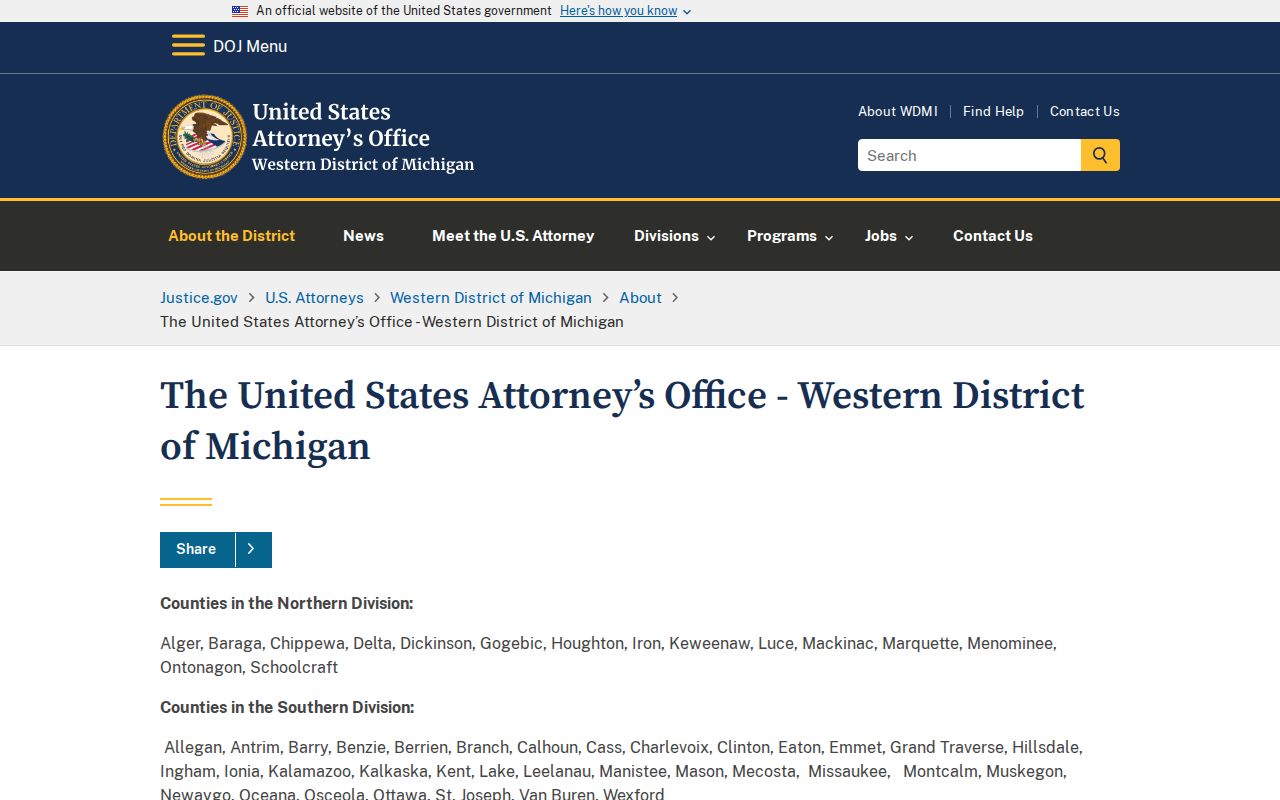
The federal district page confirms where Missaukee County sits. The U.S. Marshals Western District of Michigan handles fugitive work and runs a 24-hour tip line. No county clerk can clear a federal warrant. A state case file will not show one either. If the warrant is federal, out of state, or parole related, ask which jurisdiction issued it before anything else.
The Missaukee County Felony Warrant Track
A felony complaint does not begin in the circuit court. It begins with a probable-cause review in the 84th District Court, which covers that early stage for both Missaukee and Wexford counties. A bindover moves the file. The case then lands with the 28th Circuit Court, whose official page lists the court's location on Canal Street.
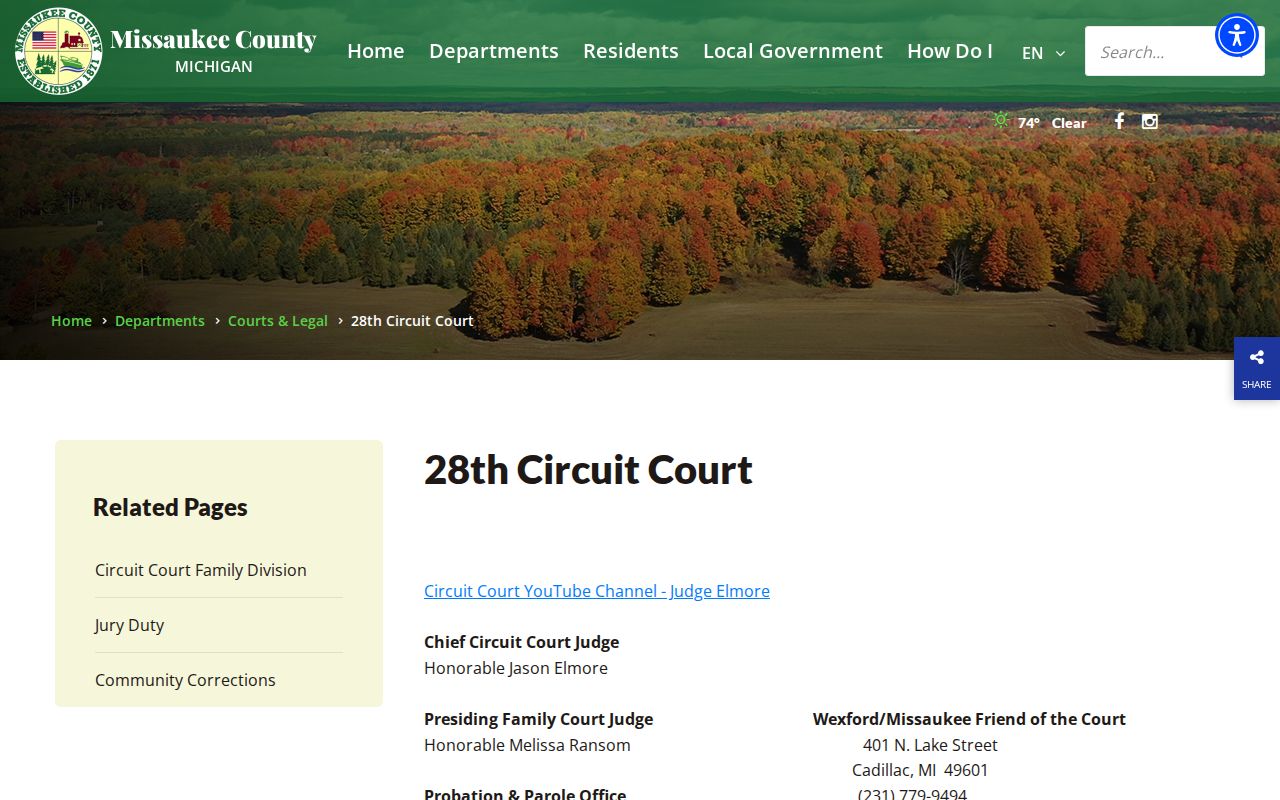
The Missaukee County Clerk serves as clerk of the circuit court, so the circuit file lives in that office. Warrants can split across files. One issued before bindover may sit in the district file while the case runs in circuit. Ask which court controls the case today.
Note: Circuit and district desks share a building, so one visit can answer both questions if you call first.
What to Do If There Is a Warrant for You
Take an arrest warrant seriously and handle it in order. Call a Michigan attorney first. Confirm the issuing court and the case number, then ask the clerk what the judge requires. A deputy cannot clear a warrant, and you should not send money before the court confirms what payment does and does not accomplish.
Important: An active arrest warrant can lead to custody at any traffic stop or public contact. Speak with a licensed Michigan attorney before arranging a surrender.
Facing a Missaukee County warrant, you have choices. You can appear voluntarily under Michigan Court Rule 6.105, have a lawyer arrange your surrender, file a motion, or seek release on conditions. Bond only covers release and appearance, so end by getting written proof that the warrant status changed.